Beginner Workout Guide: How to Start Exercising at Home
Starting a fitness journey can feel overwhelming, especially if you have never exercised regularly before. The good news is that you do not need an expensive gym membership or complicated equipment to improve your health.
Home workouts are convenient, affordable, and easy to fit into a busy schedule. With consistency and the right approach, you can build strength, improve endurance, and develop healthy habits without leaving your house.
This beginner-friendly guide will help you start exercising safely and confidently.
Why Home Workouts Are a Great Choice
Working out at home offers many advantages.
Some of the biggest benefits include:
- Saving time
- No gym membership required
- Flexible workout schedule
- Comfortable environment
- Easy to build a daily routine
The best workout is the one you can stick with consistently.
1. Set Realistic Fitness Goals
Before beginning any workout routine, decide what you want to achieve.
Your goals may include:
- Improving overall fitness
- Building strength
- Increasing flexibility
- Boosting energy
- Supporting a healthy lifestyle
Start with small, achievable goals that motivate you to keep going.
2. Prepare Your Workout Space
You do not need a large room to exercise.
A small area with enough space to move safely is usually enough.
Helpful items include:
- A yoga mat
- Comfortable athletic shoes
- A water bottle
- A towel
Creating a dedicated workout space can help build consistency.
3. Always Warm Up
A proper warm-up prepares your body for movement.
Spend five to ten minutes doing light activities such as:
- Marching in place
- Arm circles
- Shoulder rolls
- Gentle bodyweight squats
- Dynamic leg swings
Warming up helps your body feel ready for exercise.
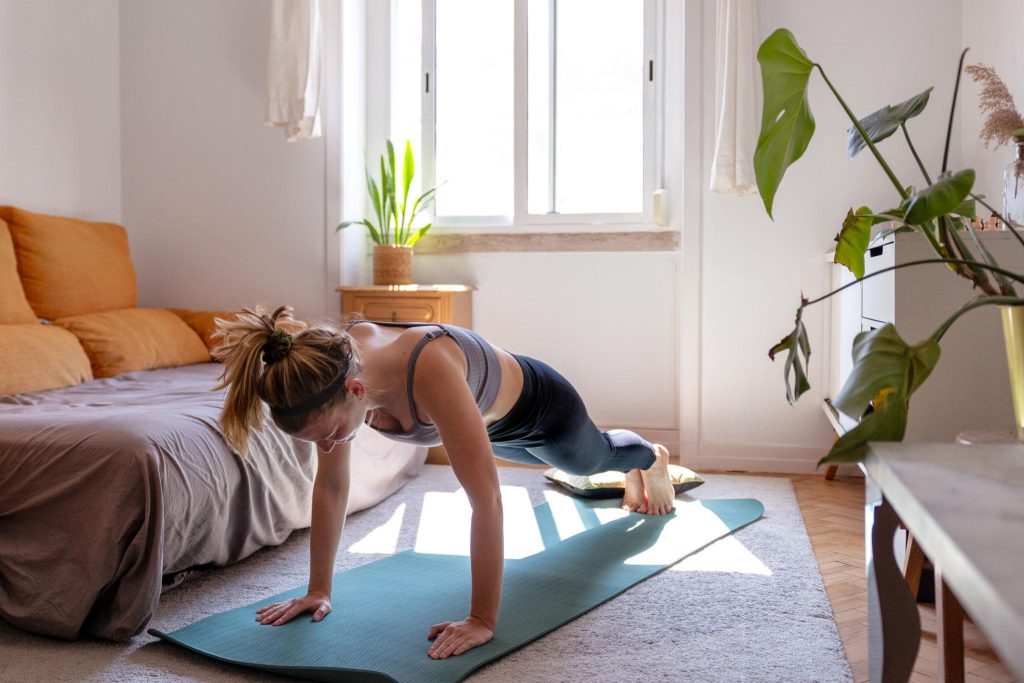
4. Start With Basic Bodyweight Exercises
You can build strength using your own body weight.
Beginner-friendly exercises include:
Squats
Strengthen your legs and glutes while improving balance.
Wall Push-Ups
A simple variation that helps build upper-body strength.
Glute Bridges
Support your hips and strengthen your lower body.
Bird Dog
A gentle exercise that improves balance and core stability.
Standing Knee Raises
A great way to improve coordination while lightly increasing your heart rate.
Complete each exercise for 10 to 15 repetitions and repeat the circuit two or three times.
5. Include Cardio Exercise
Cardiovascular exercise supports heart health and improves endurance.
Simple home cardio options include:
- Walking in place
- Dancing
- Step-ups
- Jumping jacks (or low-impact alternatives)
- Marching with high knees
Aim for 20 to 30 minutes of moderate movement several days each week.
6. Don’t Forget Core Training
A strong core supports better posture and everyday movement.
Beginner core exercises include:
- Dead bugs
- Modified planks
- Heel taps
- Seated knee lifts
Focus on controlled movement rather than speed.
7. Stretch After Every Workout
Cooling down helps your body relax after exercise.
Stretch major muscle groups including:
- Hamstrings
- Calves
- Quadriceps
- Shoulders
- Chest
Hold each stretch gently for 20–30 seconds without bouncing.
8. Stay Hydrated
Water is important before, during, and after exercise.
Drink water regularly throughout the day, especially if you are active or exercising in warm conditions.
Proper hydration supports both performance and recovery.
9. Rest and Recover
Rest days are an important part of any fitness routine.
Recovery allows your muscles to adapt and prepares your body for future workouts.
Listen to your body and avoid exercising through pain.
10. Build Consistency Instead of Perfection
Many beginners believe they need long or intense workouts to make progress.
In reality, consistency matters more.
A 20-minute workout completed several times each week is often more beneficial than one long session followed by weeks of inactivity.
Choose a schedule that fits your lifestyle and gradually increase your activity as your fitness improves.
Sample Beginner Weekly Workout Plan
Monday
- 20-minute full-body workout
- Light stretching
Tuesday
- 30-minute walk
Wednesday
- Strength training
- Core exercises
Thursday
- Rest or gentle stretching
Friday
- Full-body bodyweight workout
Saturday
- Yoga or light cardio
Sunday
- Recovery walk and stretching
Common Beginner Mistakes
Avoid these common fitness mistakes:
- Skipping warm-ups
- Exercising too intensely at first
- Ignoring rest days
- Comparing yourself to others
- Expecting instant results
Progress takes time, and small improvements add up.
Benefits of Regular Exercise
Staying active can help you:
- Improve physical fitness
- Increase daily energy
- Strengthen muscles
- Enhance flexibility
- Support better sleep
- Reduce everyday stress
Regular movement is one of the best investments you can make in your overall well-being.
Final Thoughts
Starting a home workout routine does not have to be difficult.
Focus on simple exercises, realistic goals, and steady progress. Every workout is a step toward becoming stronger, healthier, and more confident.
Remember that fitness is a long-term journey. Stay patient, celebrate small victories, and enjoy the process of building healthy habits that can last a lifetime.
Frequently Asked Questions
How long should a beginner workout last?
A beginner workout can last between 20 and 30 minutes, depending on your fitness level and schedule.
Can I get fit without going to the gym?
Yes. Bodyweight exercises, walking, stretching, and consistent home workouts can all support improved fitness.
How many days a week should beginners exercise?
Most beginners benefit from exercising three to five days per week while including rest and recovery days.