Beginner’s Guide to Indoor Plants: Easy Houseplants for Every Home
Indoor plants are one of the easiest ways to make a home feel fresh, inviting, and full of life. They add natural beauty to any room while creating a calming atmosphere that many people enjoy.
If you’re new to houseplants, getting started can seem overwhelming. Fortunately, many indoor plants are low-maintenance and forgiving, making them perfect for beginners. With a little attention to light, water, and proper placement, you can enjoy healthy plants all year long.
This beginner-friendly guide introduces easy houseplants and practical care tips to help you build confidence as a plant owner.
Why Indoor Plants Are Worth Growing
Houseplants offer much more than decoration.
Some of the benefits include:
- Adding natural beauty to your home
- Creating a relaxing atmosphere
- Bringing color into indoor spaces
- Enhancing home décor
- Encouraging a mindful daily routine
Even a few small plants can completely transform the look and feel of a room.
1. Snake Plant
Snake plants are among the easiest houseplants to grow.
They are ideal for beginners because they:
- Tolerate low light
- Require infrequent watering
- Grow slowly
- Need very little maintenance
Allow the soil to dry between waterings to help keep the plant healthy.
2. Pothos
Pothos is another excellent beginner-friendly plant.
Its trailing vines look beautiful on shelves, hanging baskets, or plant stands.
Pothos grows well in:
- Bright indirect light
- Moderate indoor temperatures
- Average household humidity
It also adapts well to different environments.
3. ZZ Plant
The ZZ plant is known for its glossy green leaves and exceptional durability.
It requires:
- Minimal watering
- Low maintenance
- Moderate to low light
This makes it a great choice for busy households or home offices.
4. Peace Lily
Peace lilies are admired for their elegant white flowers and rich green foliage.
They prefer:
- Indirect sunlight
- Slightly moist soil
- Warm indoor temperatures
They can become a beautiful focal point in living rooms or bedrooms.
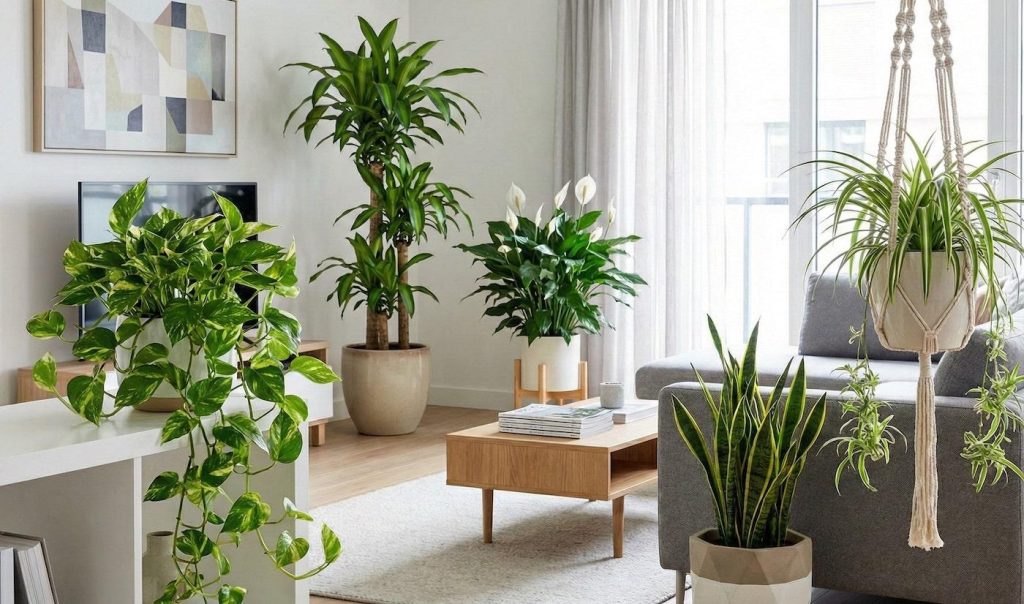
5. Spider Plant
Spider plants are popular because they grow quickly and produce attractive arching leaves.
They are suitable for:
- Shelves
- Hanging planters
- Windowsills
Spider plants are also easy to propagate, making them fun for beginners.
6. Rubber Plant
Rubber plants feature large, glossy leaves that add a modern touch to interior spaces.
They prefer:
- Bright indirect light
- Consistent watering
- Occasional leaf cleaning
With proper care, they can become an impressive indoor feature.
7. Monstera Deliciosa
Known for its iconic split leaves, Monstera has become a favorite in modern interior design.
It thrives with:
- Bright indirect light
- Moderate watering
- Room to grow
Its tropical appearance makes it a stylish addition to almost any home.
8. Aloe Vera
Aloe vera is both attractive and practical.
It enjoys:
- Bright sunlight
- Well-draining soil
- Infrequent watering
Its thick leaves store water, making it very forgiving if you occasionally forget to water it.
How to Choose the Right Plant
Before purchasing a houseplant, consider your home environment.
Ask yourself:
- How much natural light does the room receive?
- How often can I water my plants?
- Do I have enough space for larger plants?
- Am I looking for decorative foliage or flowering plants?
Choosing plants that match your lifestyle often leads to greater success.
Basic Indoor Plant Care Tips
Healthy plants start with good habits.
Remember to:
- Water only when needed
- Use pots with drainage holes
- Wipe dust from leaves occasionally
- Rotate plants every few weeks for even growth
- Avoid placing plants near heating or cooling vents
Simple care routines can keep your plants looking vibrant.
Common Beginner Mistakes
Many new plant owners accidentally damage their plants through overcare rather than neglect.
Avoid these common mistakes:
- Watering too frequently
- Using pots without drainage
- Placing plants in unsuitable lighting
- Ignoring signs of pests
- Choosing plants that do not match your home’s conditions
Observing your plants regularly helps you recognize problems early.
Decorating With Indoor Plants
Houseplants can enhance every room in your home.
Popular decorating ideas include:
Living Room
Place a large statement plant beside a sofa or window.
Bedroom
Choose calming greenery on bedside tables or dressers.
Kitchen
Grow herbs or compact plants on sunny windowsills.
Home Office
Small desk plants can make workspaces feel more relaxing and inviting.
Benefits of Building an Indoor Plant Collection
Starting with just a few easy-care plants allows you to gain experience before expanding your collection.
Over time, you’ll learn:
- How different plants grow
- How to recognize watering needs
- Which locations provide the best light
- How to create attractive plant displays
Plant care often becomes an enjoyable and rewarding hobby.
Final Thoughts
Indoor plants are one of the simplest ways to create a more beautiful and welcoming home.
You don’t need expert gardening skills to get started. By choosing beginner-friendly plants and following a few basic care tips, you can successfully grow healthy houseplants that brighten your living space for years to come.
Start with one or two easy plants, enjoy the process, and let your indoor garden grow naturally over time.
Frequently Asked Questions
What is the easiest indoor plant for beginners?
Snake plants and pothos are among the easiest houseplants because they require minimal maintenance and adapt well to different indoor environments.
How often should I water indoor plants?
Watering depends on the plant species, the season, and your home’s conditions. Always check whether the soil is dry before watering again.
Which indoor plants need the least sunlight?
Snake plants, ZZ plants, and pothos can all tolerate lower light conditions, making them excellent choices for many homes.